
SingPost begins trial of Asia’s first app-integrated Digital Stamp
 Philately News
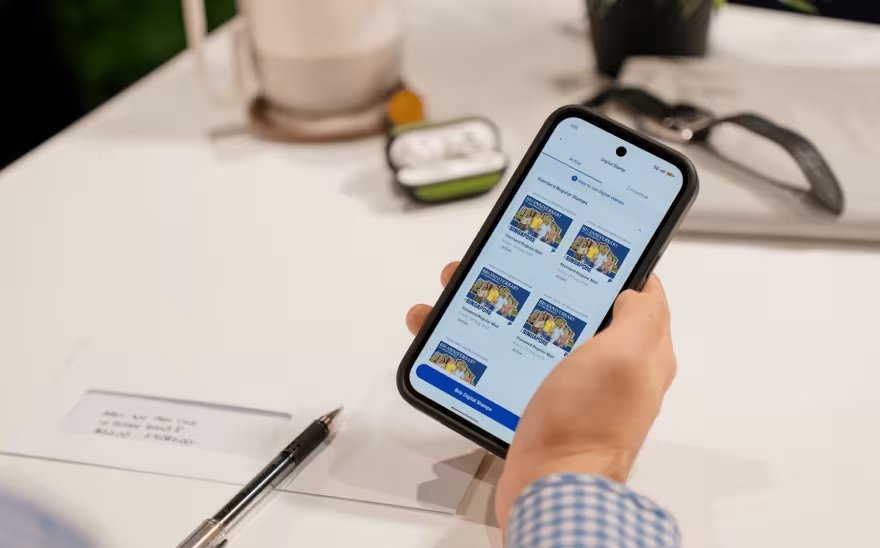
Singapore Post began a public trial of what it describes as Asia’s first Digital Stamp for ordinary domestic mail on 8 October 2026. The system replaces a physical adhesive stamp or printed label with a unique postage code bought through the SingPost mobile app. A sender purchases the required digital postage, writes the code clearly in dark blue or black ink in the top-right corner of an envelope, and deposits the item at a posting box, post office or an enabled residential letterbox nest. The trial is tied to World Post Day 2026 and is intended to test the service under normal posting conditions before wider development.
Two domestic service categories are available. Standard Regular Digital Stamps cost S$0.62 each and Standard Large Digital Stamps cost S$0.90 each, with a minimum app purchase of five stamps per denomination. Ordinary purchases remain valid for 24 months. During the introductory phase, a registered app user can buy one promotional set of five Standard Regular stamps for S$1 and one set of five Standard Large stamps for S$1.50. Codes bought at the promotional rate are valid for posting until 6 April 2027. SingPost states that Digital Stamps are non-refundable, non-cancellable and valid only for domestic Singapore mail.
The operational test runs until 6 April 2027. SingPost is collecting feedback through a survey in the mobile app and says it will use the trial to refine the user experience, improve optical-character-recognition accuracy and adjust processing workflows at real-world mail volumes. Because the sender writes the code by hand, reliable recognition is central to the service. The codes cover letters, postcards and printed paper items in paper envelopes.
Although the postage is digital, SingPost has deliberately retained stamp-like visual design inside the app. The initial Standard Regular artwork uses the 61st National Day design, while the Standard Large product carries a World Post Day otter design. Digital artwork is intended to change for national and festive occasions. The system also contains a collectable element: every fifteenth purchase unlocks a special design, initially an image of the Fullerton Building, which housed Singapore’s first General Post Office. These features distinguish the product from a plain alphanumeric postage purchase and connect it visually with Singapore’s existing stamp programme.
The service complements SingPost@MyBlock, whose islandwide rollout was completed by September 2026 across more than 20,000 residential buildings. Where the feature is available, residents can use the Return Mail slot in their existing letterbox nest to post letters and small parcels. Combining that network with app-purchased codes means a sender can prepare and post domestic letter mail without visiting a post office, vending machine or self-service kiosk. SingPost also scheduled a free public roadshow at the SingPost Centre atrium from 8 to 11 October to demonstrate Digital Stamps and other postal developments.
For postal historians, the trial documents a transition between adhesive postage, machine-generated labels and app-based payment. A Digital Stamp is not gummed or self-adhesive, yet it carries denomination, design and validity rules and occupies the traditional stamp position. Complete used covers provide the strongest evidence: the code, processing marks, posting date and destination should remain together. Trial dates and service conditions help separate promotional screenshots from postal artefacts that travelled through the mail.
Followers
Loading...