⚠️ Security, Copyright & Legal Notice: Over the last one month, we have observed certain websites systematically scraping, copying and reproducing content from Philatelist.co.in. This includes names, stamp records, images, descriptions and database information, along with exact replication of our website's features and functionality. We have established advanced tracking and monitoring, supported by historical website archives, digital records, automated monitoring tools and technical evidence. This helps us identify such activity, track content replication and preserve the digital footprints involved. We are also monitoring bot-driven attacks, phishing attempts and other malicious activity targeting our platform. All such activity is being documented. We are evaluating appropriate legal action, wherever legally applicable. This includes formal legal notices to the websites and entities involved, and to their responsible founders, directors and operators. Unauthorised scraping, content reproduction, intellectual property infringement and malicious interference will not be tolerated. — Philatelist.co.in
▾
Change Mode
Philatelist.co.in  /  Club partnership Feature 22
Feature 22  /  Club life in practice

AI Stamp Identifier

Give every member a first step when a stamp raises a question.
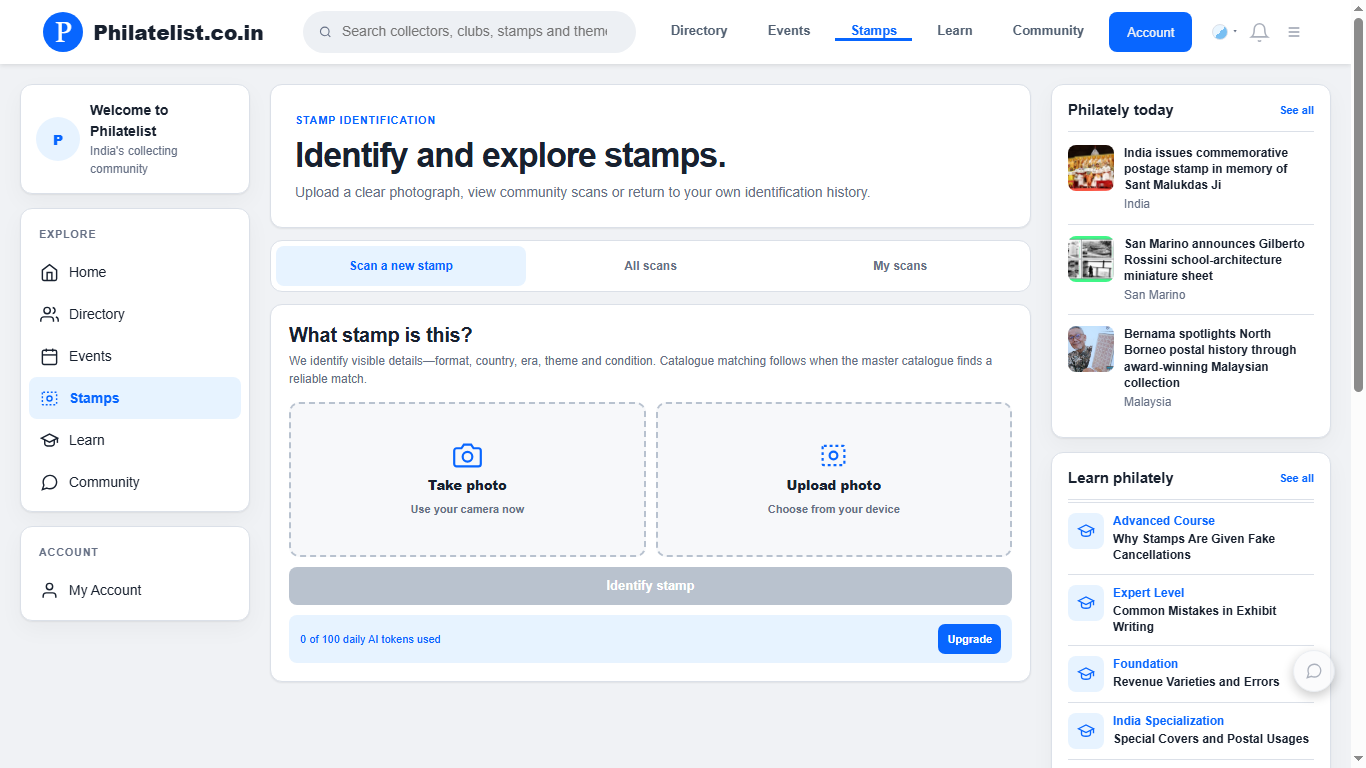
Philatelist.co.in new stamp identification page with photo and upload choices
A first question starts with a clear choice: take a photo or upload one.
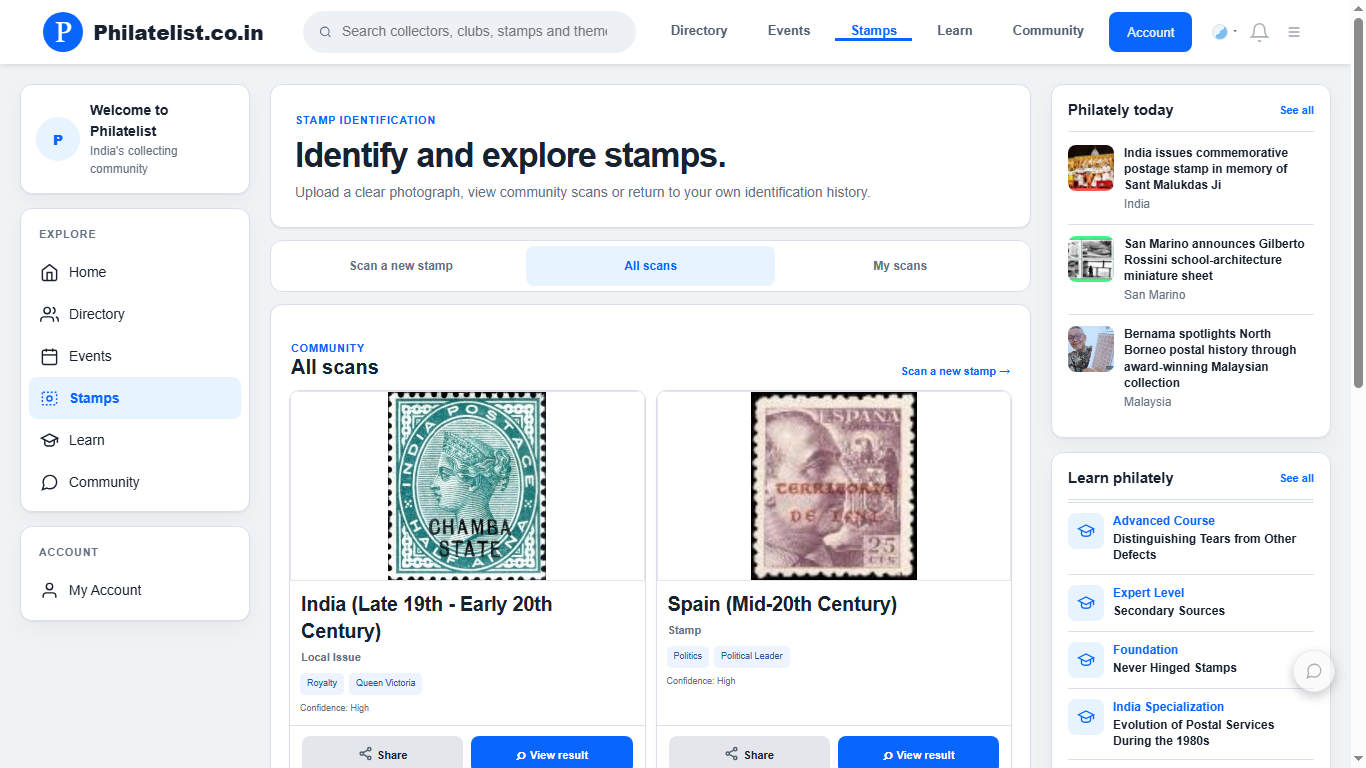
Philatelist.co.in all scans page showing identification results
The shared scan history turns individual curiosity into community reference.

A beginner may have a stamp but no vocabulary. An experienced collector may have a difficult item, a crowded page or a question they want to investigate before the next meeting. India’s first AI Stamp Identifier gives them a practical starting point.

A member can take a photo or upload one, and the system can separate multiple philatelic items in the same image before analysing them. It returns a rich first-level record—format, country, issuing authority, series, denomination, date or period, themes, visible text, subjects, postal markings, perforation, printing, watermark, condition, history and more—with feedback available when the result needs correction.

Inside the workflow

Identification starts with a camera or upload, then keeps a history of scans and results. The platform’s daily AI allowance is visible, while the result connects visual clues to catalogue research.

Picture this

A member scans a mixed page, receives separate item results, brings the uncertain one to the club and learns not only the answer but how a senior collector reached it.